

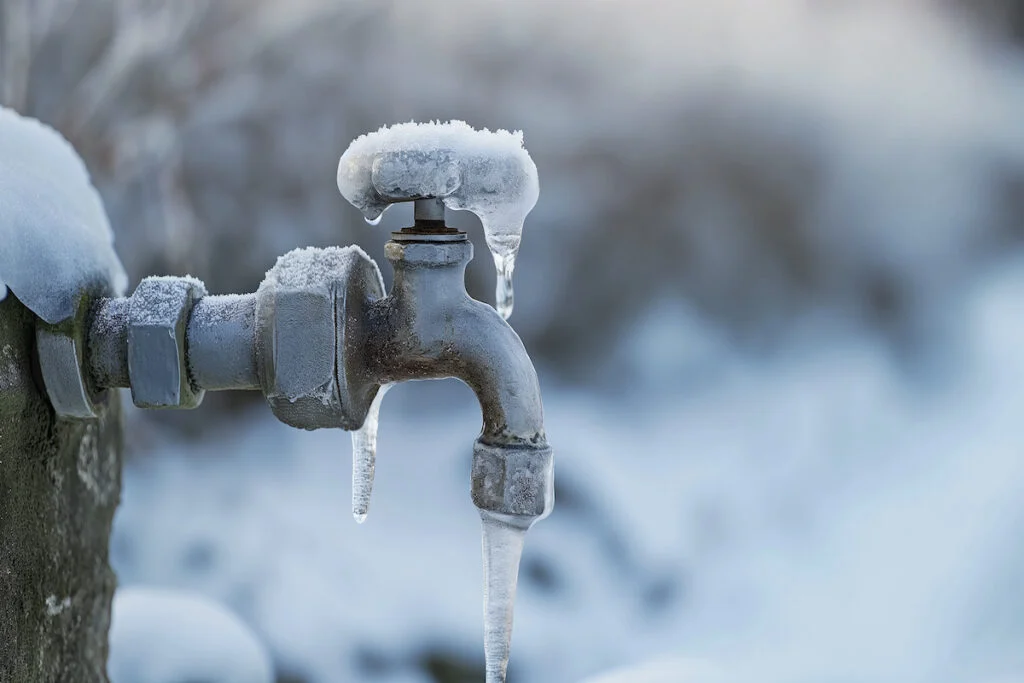
It’s 2:00 AM on a Tuesday in December. Outside, the Grande Prairie wind is howling, and the thermometer is reading a casual -32°C. Inside, you’re jolted awake not by your alarm, but by the unmistakable sound of rushing water where there shouldn’t be any.
Panic is the natural reaction. But in the first 10 minutes of a plumbing emergency, panic is your enemy. Speed and clear thinking are your best friends.
Whether it’s a burst frozen pipe, a water heater letting go, or a sewer backup, the damage happens fast. But you can stop it. Consider this your emergency playbook for those critical moments before our maintenance and repair team arrives.
1. Safety First: Stop and Assess
Before you splash into action, take three seconds to scan the scene.
- Is there standing water? Water and electricity are a dangerous mix. If the water has reached electrical outlets or appliances, do not step into it. Go to your electrical panel (if it’s in a dry area) and kill the power to the affected room or the whole house.
- What kind of water is it?
- Clean Water: Likely a supply line or burst pipe. Your priority is stopping the flow.
- Dirty/Smelly Water: Likely a sewer backup or drain issue. This is a biohazard. Keep kids and pets far away.
2. Stop the Bleeding (Shut Off the Water)
This is the single most important step. You need to stop the new water from entering your home.
Option A: The Fixture Shutoff
If the leak is coming from a specific toilet, sink, or washing machine, look for the small valve behind or under it. Turn it clockwise (righty-tighty) until it stops.
Option B: The Main Shutoff (The Big One)
If the fixture valve is stuck, or if water is pouring from a wall or ceiling, go for the main whole-home shutoff immediately.
- Where is it? In most Grande Prairie homes, it’s in the basement or mechanical room, usually near the floor where the water meter is located.
- What does it look like? It’s typically a lever or a round wheel handle.
- What to do: Turn the lever so it’s perpendicular to the pipe, or turn the wheel clockwise until tight.
Tip: If you live in a multi-unit condo or apartment and can’t find your shutoff, contact your building manager immediately.
3. Stabilize and Depressurize
Once the main water supply is off, there is still water sitting in your pipes waiting to leak out. Get rid of it in a controlled way.
- Open the lowest faucet in your house (like a laundry tub or basement bathroom sink). This drains the water out of the pipes safely.
- Flush your toilets to empty the tanks.
- Turn off your water heater. If it’s gas, turn the dial to “Pilot” or “Off.” If it’s electric, flip the breaker. This protects the tank from burning out if it drains empty.
4. Special Triage for Sewer Backups
If water is coming up through your floor drains or toilets, shutting off the water supply won’t stop it instantly, but you must stop adding water to the system.
- Do NOT flush toilets.
- Do NOT run the dishwasher or washing machine.
- Do NOT run any sinks.
- If you have a backwater valve, check if it has engaged.
- Note: Avoid using chemical drain cleaners during a backup. They rarely clear major blockages and create a hazardous chemical “soup” that our plumbers have to deal with safely when we arrive.
5. Protect Your Property
With the flow stopped, shift into damage control mode while you wait for help.
- Move valuables: Get electronics, heirlooms, and furniture off the floor or away from the wet area.
- Containment: Use buckets, towels, and shop vacs to contain the spread.
- Airflow: If it’s safe (no electrical risk), get air moving to start drying things out.
6. Document for Insurance
Before you do too much cleanup, grab your phone. Insurance adjusters love documentation.
- Take photos and video of the source of the leak.
- Take wide shots of the water damage to floors, walls, and belongings.
- Keep any failed parts (like a split connector) if you find them.
7. Call the Pros and Communicate Clearly
Now that the immediate threat is managed, it’s time to call in the cavalry.
Call Everlast Plumbing & Heating at 780-296-4770
To get the fastest help, tell our dispatcher:
- “I have shut the water off.” (This tells us the immediate crisis is paused).
- “The leak is coming from [location].”
- “I am in a [house/condo/commercial building].”
We prioritize emergencies, especially during our cold northern winters. Knowing you’ve already performed triage helps us prepare the right tools for the job before we even pull into your driveway.
An Ounce of Prevention…
Once the dust settles and the repairs are made, take a breath. Most emergencies, like frozen pipes, are preventable with the right winterization. If it’s been a while since your mechanical room saw some love, consider booking a preventive service visit.
Contact us today to schedule an inspection or keep our number handy for when you need us most. Stay warm and dry out there, Grande Prairie!